



T here was a time when morning did not begin with an alarm, a cup of tea or a glance at a phone.
It began with a command.
One moment, the barrack would be wrapped in the last few minutes of sleep. The next, it would come alive with hurried footsteps, beds being straightened, uniforms being pulled on and young men trying desperately not to be the last ones ready for fall-in.
There was no snooze button. No negotiation. No room for “just five more minutes.”
Those were my training days in the Indian Navy.
At the time, we thought we were simply learning how to march, salute, maintain our kit, obey orders and meet standards that often seemed impossibly exacting. Only much later did I understand what was really happening.
The Navy was not merely preparing us to serve on ships and establishments. It was dismantling the careless versions of us and rebuilding us around discipline, responsibility, teamwork and trust.
It was teaching us how to stand steady when life became uncertain.
When ordinary habits became matters of pride
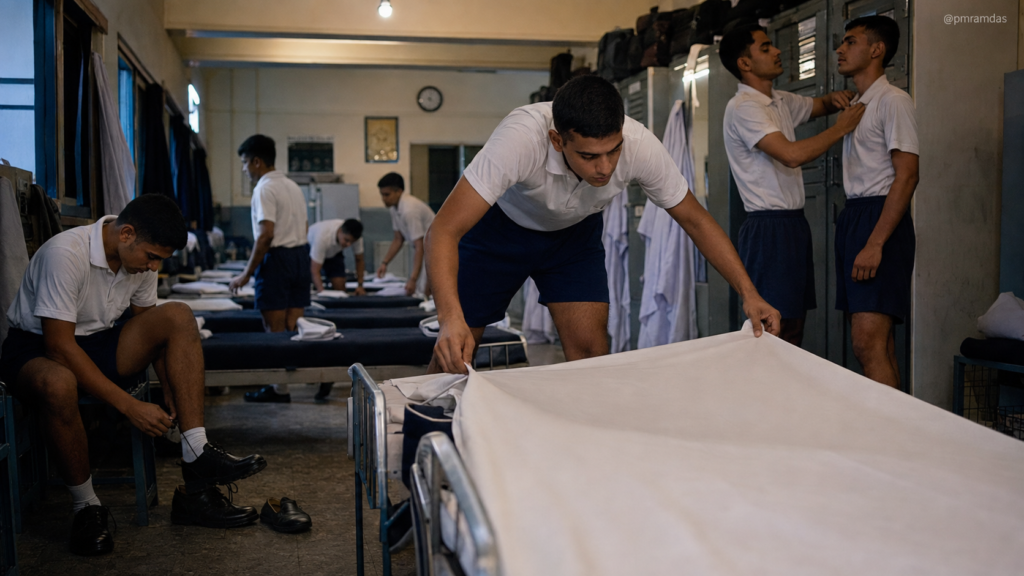
Before joining the Navy, a polished shoe was just a polished shoe. A neatly folded shirt was simply a neatly folded shirt. Being a minute late did not seem capable of changing the course of anything important.
Training changed that understanding completely.
We learned that small things were rarely small.
The way we made our beds reflected our attention to detail. The condition of our uniform revealed our pride. Reaching fall-in on time demonstrated respect for everyone waiting in formation. Caring for our equipment showed whether others could depend on us when the stakes were much higher.
The standards were not always comfortable, but comfort was never the purpose.
The purpose was consistency.
Anyone can perform well when rested, appreciated and operating in perfect conditions. Training taught us to remain dependable when we were tired, under pressure and far outside our familiar world.
That lesson has followed me throughout my life.
We arrived as individuals and learned to move as one
Each of us came from a different home, background and part of India. We carried different languages, habits, ambitions and ideas about who we were.
Then the training began.
On the parade ground, nobody could succeed alone. One person moving out of rhythm affected the entire formation. One person failing to prepare created pressure for everyone else. One person struggling meant the rest of us learned to slow down, reach out and bring him along.
That was one of the earliest and most important leadership lessons of my life:
A team does not move at the pace of its strongest member. It moves with the trust its members have in one another.
Our batch did not become a family through grand declarations. Brotherhood grew in much smaller moments.
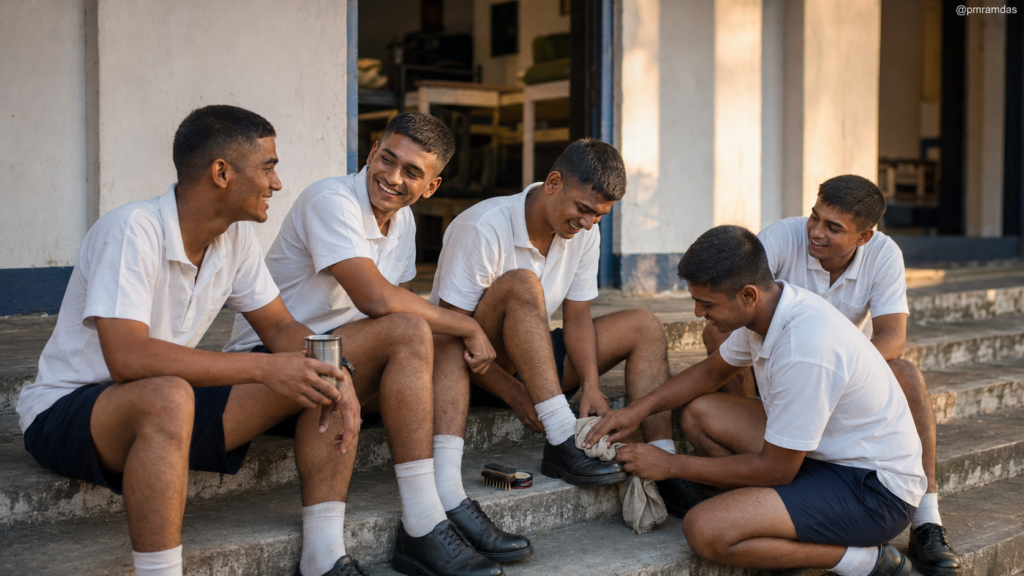
It was there when somebody quietly helped another sailor get ready before an inspection. It was hidden in the laughter that returned after an exhausting day. It lived in the shared tea, the private jokes and the familiar faces that made an unfamiliar place feel less distant from home.
We argued. We competed. We irritated one another. We also learned that when the pressure rose, the same man who had annoyed us in the barrack could be the first one standing beside us.
That is the strange beauty of military friendship.
It is not built by convenience. It is forged by shared discomfort, shared responsibility and the knowledge that none of us gets through the hardest days entirely alone.
The quiet moments nobody saw
Training memories are often told through parade grounds, physical endurance and stern commands. But some of the most powerful moments were the quiet ones.
There were evenings when the body was exhausted but the mind refused to rest. In those moments, thoughts travelled home.
This was long before video calls made distance feel smaller. A brief opportunity to speak to family could become the emotional centre of an entire week. We waited, listened and tried to fit everything we felt into a short conversation.
We usually told our families that everything was fine.
Sometimes it was. Sometimes it was simply what they needed to hear.
Then the call would end, we would return to the barrack, and life would continue with the next instruction, the next fall-in and the next morning.
Without realising it, we were learning emotional strength. Not the kind that denies vulnerability, but the kind that feels deeply and still fulfils its duty.
Discipline was never about shouting
People often misunderstand military discipline. They imagine that it is created by fear, loud voices or punishment.
Those may enforce obedience for a moment. They cannot create character.
Real discipline is what remains when nobody is watching.
It is doing the right thing because the mission, the team and your own integrity demand it. It is checking once more when it would be easier to assume. It is staying calm when confusion begins spreading. It is communicating clearly when others are waiting for direction.
The Indian Navy taught me that composure is not passivity. Calmness under pressure is an active strength. It allows a person to see what panic hides, hear what noise buries and make decisions that fear would otherwise distort.
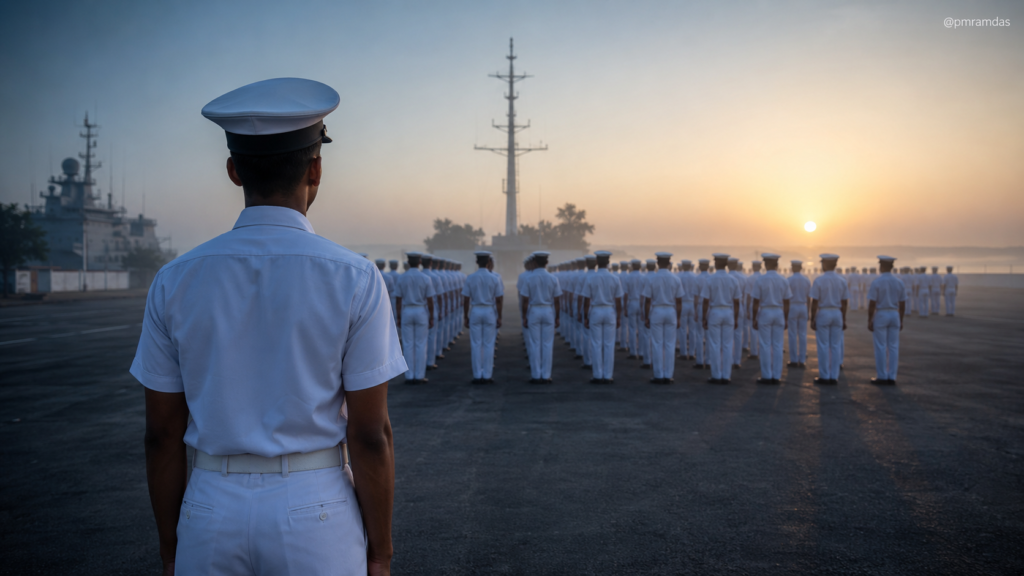
Years later, when I entered the world of technology and cybersecurity, I recognised the same truth in a very different environment.
A cyber crisis also arrives with incomplete information, rising pressure and very little time. Screens replace the parade ground. Digital systems replace naval machinery. The people looking for direction may be executives, engineers or incident responders rather than sailors.
But the fundamentals remain familiar.
Prepare before the crisis. Trust the team. Communicate clearly. Respect the process. Never allow panic to take command.
The lessons that travelled with me
I served in the Indian Navy for 15 years, but the Navy has remained within me far longer than any formal period of service.
It shaped how I understand leadership.
Leadership is not the privilege of standing in front. It is the responsibility of ensuring that nobody behind you is left without direction.
It shaped how I understand preparation.
Preparation is not pessimism. It is respect for the possibility that conditions may change without asking our permission.
It shaped how I understand trust.
Trust cannot be demanded by rank or designation. It must be earned through competence, consistency and the willingness to stand beside people when circumstances become difficult.
And it shaped how I understand resilience.
Resilience does not mean that nothing affects us. It means that adversity does not get the final word.
These ideas later became central to my work in technology, cybersecurity and boardroom leadership. The domains changed, but the operating principles did not.
Every organisation needs discipline in the small things. Every crisis needs calm thinking. Every strategy depends on people trusting one another before the storm begins.
If I could speak to that young trainee today

I would tell him that the days he finds most difficult will one day become some of the memories he protects most carefully.
I would tell him that the men standing beside him will not remain merely batchmates. Decades later, one message, one reunion or one old photograph will make time collapse, and they will once again become the same young sailors laughing in the barrack.
I would tell him that the uniform will eventually be folded away, but the habits it created will continue shaping every responsibility he accepts.
Most of all, I would tell him to pay attention.
Not only to the commands and drills, but to the friendships forming quietly around him. To the courage hidden inside homesickness. To the pride growing each time the batch learns to move together. To the person emerging beneath the uniform.
Because training does not merely teach a sailor what to do.
It reveals who he can become.
Today, when I look back at my naval training days, I do not remember only the tired body, the hurried mornings or the pressure to get everything exactly right.
I remember the transformation.
We arrived carrying our individual names, stories and dreams.
We left carrying something larger: discipline in our actions, courage in our minds, loyalty in our hearts and a brotherhood that time has never been able to erase.
The Navy gave me a uniform for a chapter of my life.
But it gave me an identity for a lifetime.
The uniform may eventually be folded away, but the discipline, friendships and sense of duty it creates remain on active service for life.”
Recent Posts
